
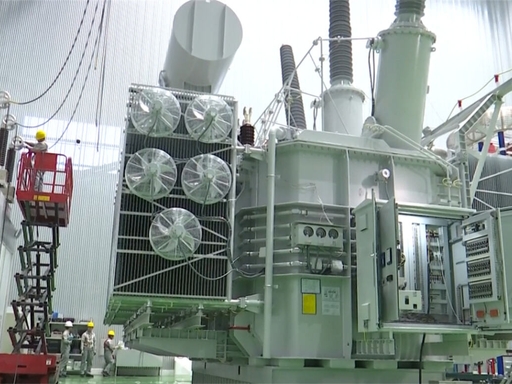
A 345kV fully insulated transformer is designed for high-capacity transmission and substation projects that require a consistent insulation level across the winding terminals and neutral point. It is commonly specified for complex grid conditions where insulation coordination, fault performance and long-term reliability require careful engineering review.
Yawei Transformer provides customized 345kV power transformer solutions for international utility, industrial and renewable-energy projects. This 250MVA oil-immersed design can be configured according to project voltage, capacity, cooling, tap-changing, monitoring and applicable technical-standard requirements.
345kV Fully Insulated Transformer for ANSI Power Grid Projects
A 345kV fully insulated transformer uses a neutral-point insulation design that is selected according to the system grounding method, overvoltage conditions and protection philosophy of the project. Unlike a graded-insulation arrangement, a fully insulated design provides the specified insulation capability at both line terminals and the neutral point.
This configuration can be appropriate for selected transmission and substation projects in North America, Latin America and other markets where the system design requires a fully insulated neutral. Final insulation design must always be confirmed against the customer specification, grid study and applicable standards.
Key Specifications of the 250MVA Transformer Solution
Each 345kV transformer project has different electrical and site requirements. Yawei works with customers to confirm the required parameters before design and production.
- Voltage class: 345kV, customizable for project requirements
- Rated capacity: up to 250MVA for this reference configuration
- Transformer type: three-phase oil-immersed power transformer
- Tap changer: on-load or off-circuit configuration, subject to design requirements
- Cooling: selected according to rated capacity, ambient conditions and duty cycle
- Monitoring: optional temperature monitoring, DGA monitoring and intelligent condition-monitoring systems
- Customization: winding arrangement, vector group, bushings, terminal layout and accessories available on request
For applications at other voltage levels, view our full transformer product range.
1. Reliable Insulation Design for High-Voltage Operation
The insulation system is one of the most important design elements of a 345kV fully insulated transformer. It must withstand normal operating voltage, switching overvoltage, lightning impulse conditions and other electrical stresses defined by the project specification.
A fully insulated neutral arrangement is not automatically the correct choice for every power transformer. It should be selected based on the grounding method, protection design, fault conditions and customer technical requirements.
Key insulation-design considerations include:
- High-voltage winding insulation structure
- Neutral-point insulation level
- Electric-field distribution and shielding design
- Lead insulation and bushing coordination
- Partial-discharge performance requirements
- Factory test requirements for the complete transformer
2. 345kV Fully Insulated Transformer Manufacturing and Testing
Large power transformers require controlled manufacturing processes at every stage, from material preparation and winding production to active-part assembly, vacuum drying, oil filling and final testing.
For a 345kV fully insulated transformer, the manufacturing process typically includes electromagnetic design verification, thermal analysis, insulation coordination, winding assembly, core assembly and final quality inspection.
Testing is performed according to the approved technical specification and may include routine tests, type tests or special tests. Depending on project requirements, this can include ratio testing, winding-resistance measurement, impedance testing, insulation-resistance testing, applied-voltage testing, induced-voltage testing, partial-discharge testing and temperature-rise testing.
Customers should confirm test scope, witness requirements, document requirements and third-party inspection arrangements before production begins.
3. Short-Circuit Strength and Transport Considerations
Power transformers used in transmission grids must be designed to withstand mechanical and thermal stress associated with system faults. Winding support, clamping structures, lead arrangement and insulation components all contribute to the short-circuit capability of the transformer.
Long-distance transportation must also be considered during the design stage. Transport dimensions, total weight, lifting points, impact monitoring and shipping route limitations should be reviewed before dispatch.
For international delivery, Yawei can coordinate packaging and shipping preparation according to the project’s logistics plan. This may include moisture protection, accessory packing, shock monitoring and technical documentation for site receipt and installation.
Applications for 345kV Power Transformers
A 345kV fully insulated transformer may be used in projects that require high-capacity power transfer and a project-specific insulation arrangement. Typical applications include:
- Transmission and grid-hub substations
- Regional grid-interconnection projects
- Large power-generation facilities
- Solar, wind and energy-storage grid-connection projects
- Industrial power systems with high-capacity demand
- Data-center and major infrastructure power-supply projects
For the role of high-voltage equipment in renewable-energy integration, read our guide to transformers for solar and wind power projects.
ANSI, IEC and Project-Specific Requirements
International power projects may follow ANSI, IEC, GB or customer-specific technical requirements. The applicable standard depends on the destination market, the utility specification and the complete system design.
When sourcing a 345kV fully insulated transformer, customers should provide the voltage combination, rated capacity, frequency, cooling method, vector group, impedance, insulation level, tap-changer requirements, bushing details and required test standards.
Technical requirements should be reviewed early in the project to avoid changes after design approval. For more information about standards development and electrical-system terminology, refer to the American National Standards Institute.
Why Work with Yawei Transformer
Yawei Transformer supports customers from early technical discussion through manufacturing, testing, delivery and project documentation. Our team can assist with customized transformer design for utility, industrial and renewable-energy applications.
- Customized voltage and capacity configurations
- Engineering review based on project specifications
- Flexible accessory and monitoring options
- Factory testing and technical documentation support
- Export packing and international-shipment coordination
For projects that require high-voltage transformer equipment, contact Yawei Transformer with your technical specification and application details. We will recommend a suitable solution based on the actual grid and operating conditions.
Conclusion
A 345kV fully insulated transformer can provide a project-specific solution for high-capacity transmission and substation applications. Correct selection depends on insulation coordination, system grounding, fault requirements, technical standards and long-term operating conditions.
By confirming the project requirements before design and production, customers can obtain a reliable transformer solution that supports safe operation, efficient power transfer and future grid development.
 English
  Spanish
  Arabic
  French